
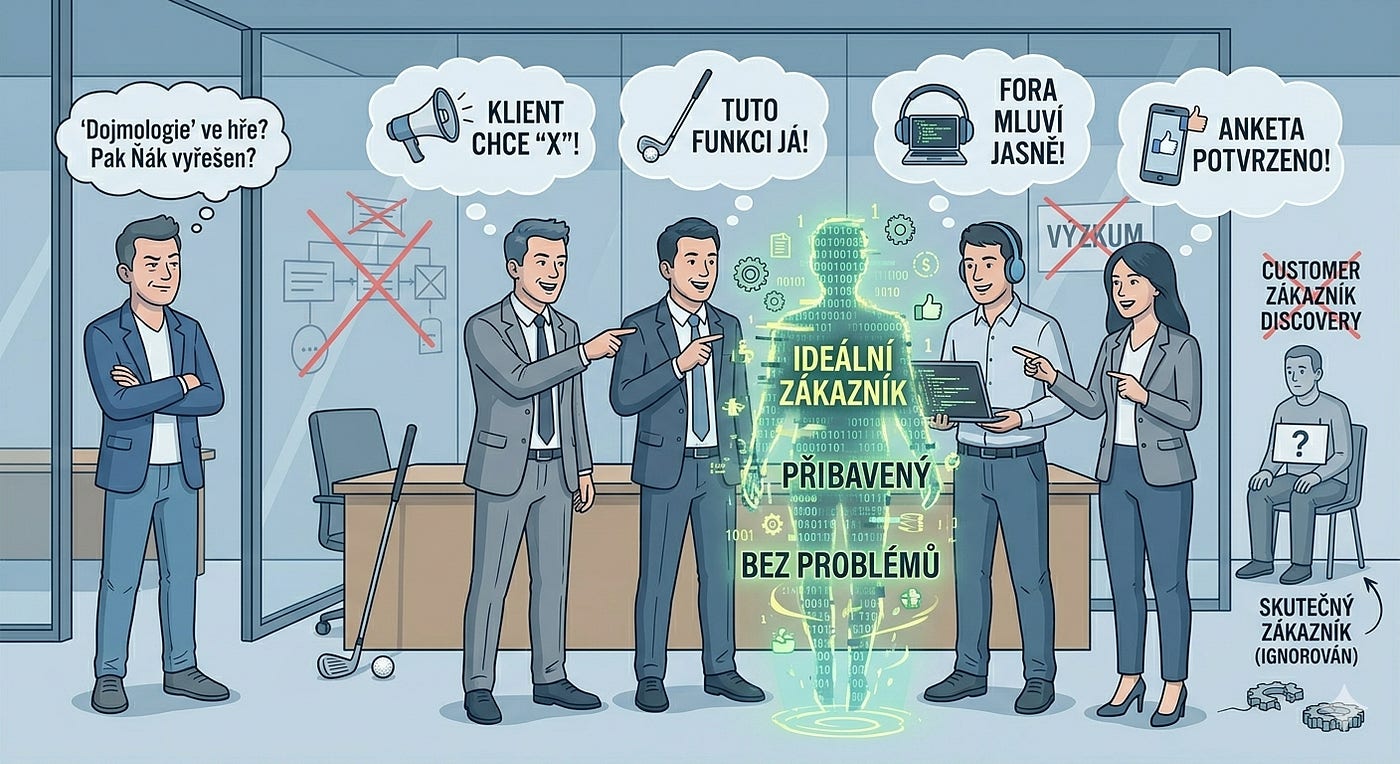
“We know what our customer wants”
Even though nobody asked them. Why companies build an imaginary customer instead of the real one – and how to run a customer conversation that tells you something.
 Václav Duda25 May 2026 · 3 min readVáclav Duda17 Apr 2026 · 2 min read
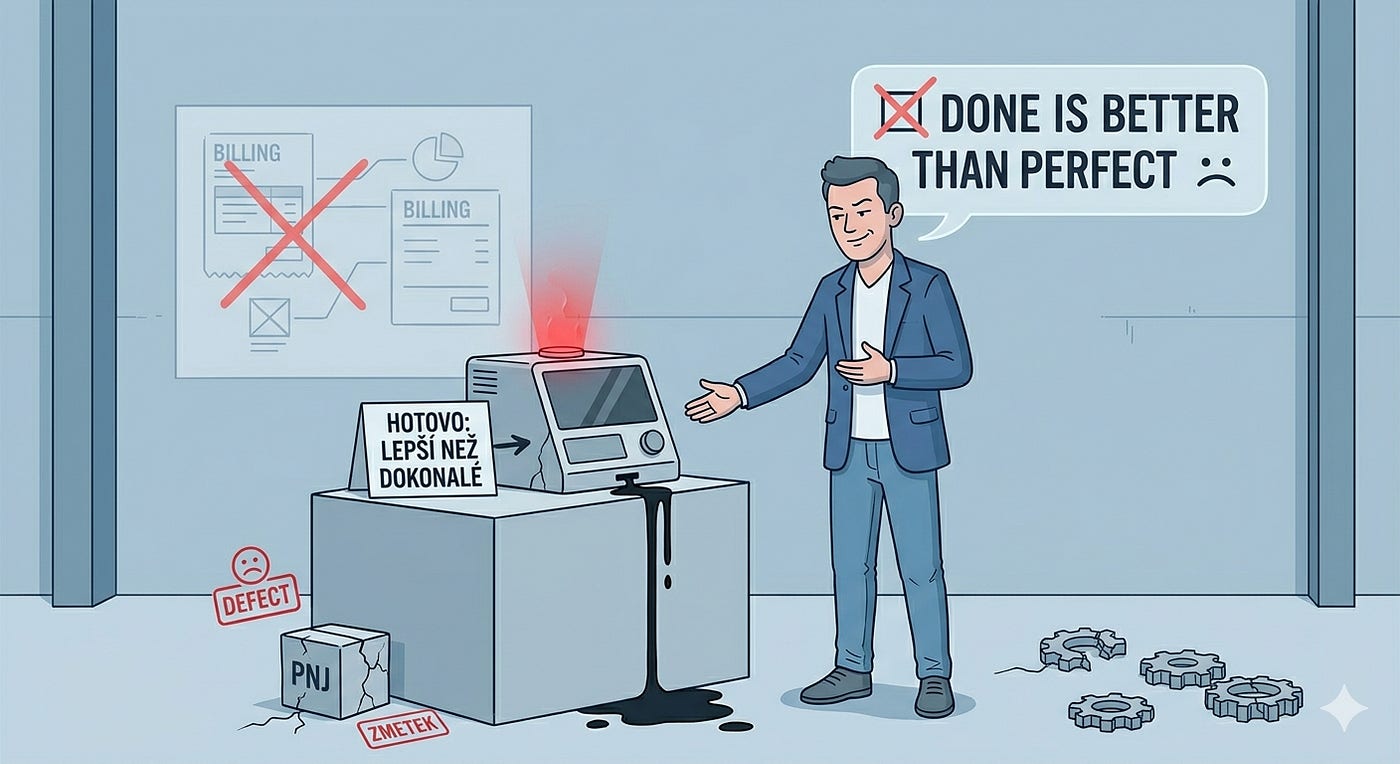
Silicon Valley mantras sound great in meetings. “Fake it till you make it” and “Done is better than perfect” were born with good intentions. They were meant to protect development teams from analysis paralysis. The idea was clear: do not get stuck endlessly polishing details, do not wait for 100% perfection – get the product to market quickly so you get feedback.
In practice, though, these phrases have mutated dangerously.
The original push for speed has become a universal excuse for sloppiness and a way to wash your hands of unfinished work. The most important word has disappeared from the idea of an MVP (Minimum Viable Product): “viable”. Instead, half-built products that do not work are released to the market. And when it all falls apart, management covers it with “done is better than perfect”.
Here is one painful example from my own practice where exactly this approach backfired.
An IT company was launching a new SaaS service. The product itself worked, so they decided to release it and sort out the operational side along the way. They designed pricing and billing made up of a fixed fee for the service and a variable component based on data consumption on a subcontractor’s infrastructure.
It sounded logical – until it hit reality.
First, the billing model they had designed did not match how the infrastructure subcontractor actually billed. Second, the internal systems and the entire invoicing process had historically been built for one-off B2B IT implementations. The company’s processes were not ready for a SaaS model or for charging for ongoing consumption at all.
The result was a disaster on two fronts. The customer had no idea in advance how much they would be invoiced at the end of the month. Their consumption costs were completely unpredictable, which, logically, led to enormous dissatisfaction.
Inside the company it meant accounting and process hell. They needed to take the subcontractor’s consumption, add a margin and re-invoice it to the client. But the ERP could not handle it. They could not invoice efficiently, let alone report margin by product or by customer. They were flying blind.
Cleaning up after that “done is better than perfect” cost me a huge amount of effort. I essentially had to stop the whole thing and go back to the start: completely rework the product, overhaul the pricing and the reporting, and make changes to the company’s ERP. Only then did the product become genuinely “viable”.
The dead end here lies in misunderstanding what “done” means.
When you launch a product, it does not need every promised feature on day one. Its design can be simple. But if you cannot reliably invoice it, the customer does not know what they will pay, and your internal systems cannot cope, then it is not an MVP. It is just junk that breaks the company from the inside, with everyone blaming everyone else.
Whatever motivational slogan you hang on the office wall, basic business physics still applies.
Try to cheat it, and reality catches up with you – hard.
Translated from the Czech original, first published on Václav Duda’s Substack Produktový management prakticky.
 Product & marketing
Even though nobody asked them. Why companies build an imaginary customer instead of the real one – and how to run a customer conversation that tells you something.
Václav Duda25 May 2026 · 3 min read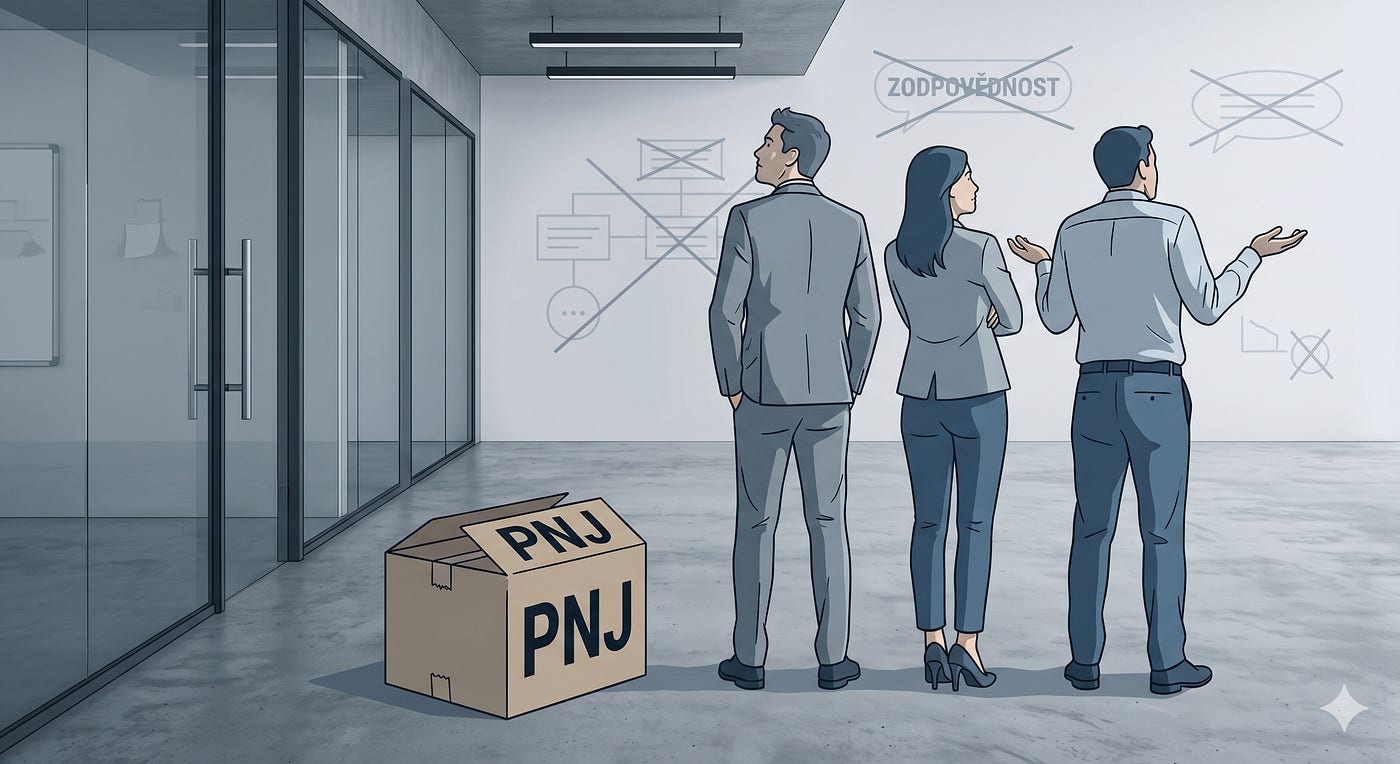 Product & marketing
They are not on the org chart and draw no salary, yet they reliably wreck months of development. Five steps to fire them before they poison your customers.
Václav Duda16 Apr 2026 · 3 min readTell us what you are facing. We will get back to you within one business day.
Or directly: +420 773 996 588 · info@strategix.one